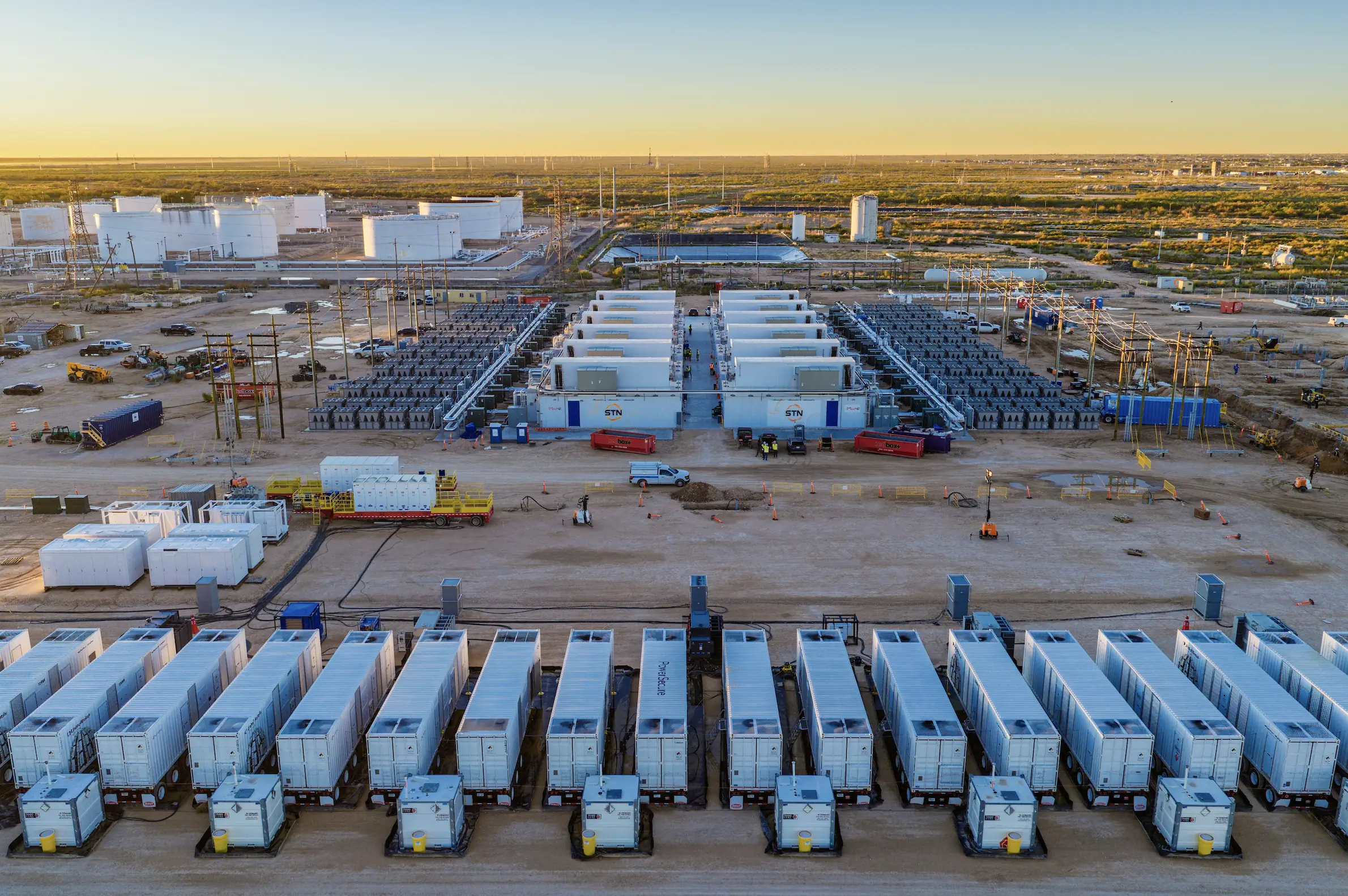
AI has to live somewhere. We choose where, and how.
The world needs far more computing power, and all of it runs inside physical buildings that draw power, need cooling, and sit in someone’s county. Many communities have watched big projects arrive with big promises and leave them with higher bills. We understand why people ask hard questions.
Our answer is to build where energy is already the local economy, carry our own costs, bring our own cooling water, and stay long enough that our reputation here is the one that matters most.
Our commitments
Six commitments. Each one you can check.
Our power is our problem.
We pay for the power our campus uses and for everything that delivers it: substation work, on-site generation, and battery storage. Our campus is built in layers, so it carries its own load and steps back from the grid when Texas needs power most.
By the numbers
$0 of our power infrastructure costs passed to household bills
How we share it
Our power use and grid behavior, published every year
Cooling water we bring with us.
Our campus cools with a glycol and water mixture we truck in from outside Odessa. It works like the radiator in your truck: we fill it once, and the same fluid circulates through sealed lines from then on. The only local water we use goes to restrooms and sinks for our team.
By the numbers
0 gallons of local water for cooling
How we share it
Metered water use, published every year
We build on lines that already exist.
We build next to electrical infrastructure that already exists. Our Odessa campus sits beside a live high-voltage substation, so power reaches us over existing lines and open West Texas land stays open.
By the numbers
0 miles of new transmission line across open land
How we share it
Site and permit records, linked from this page
Built in our factory, assembled here.
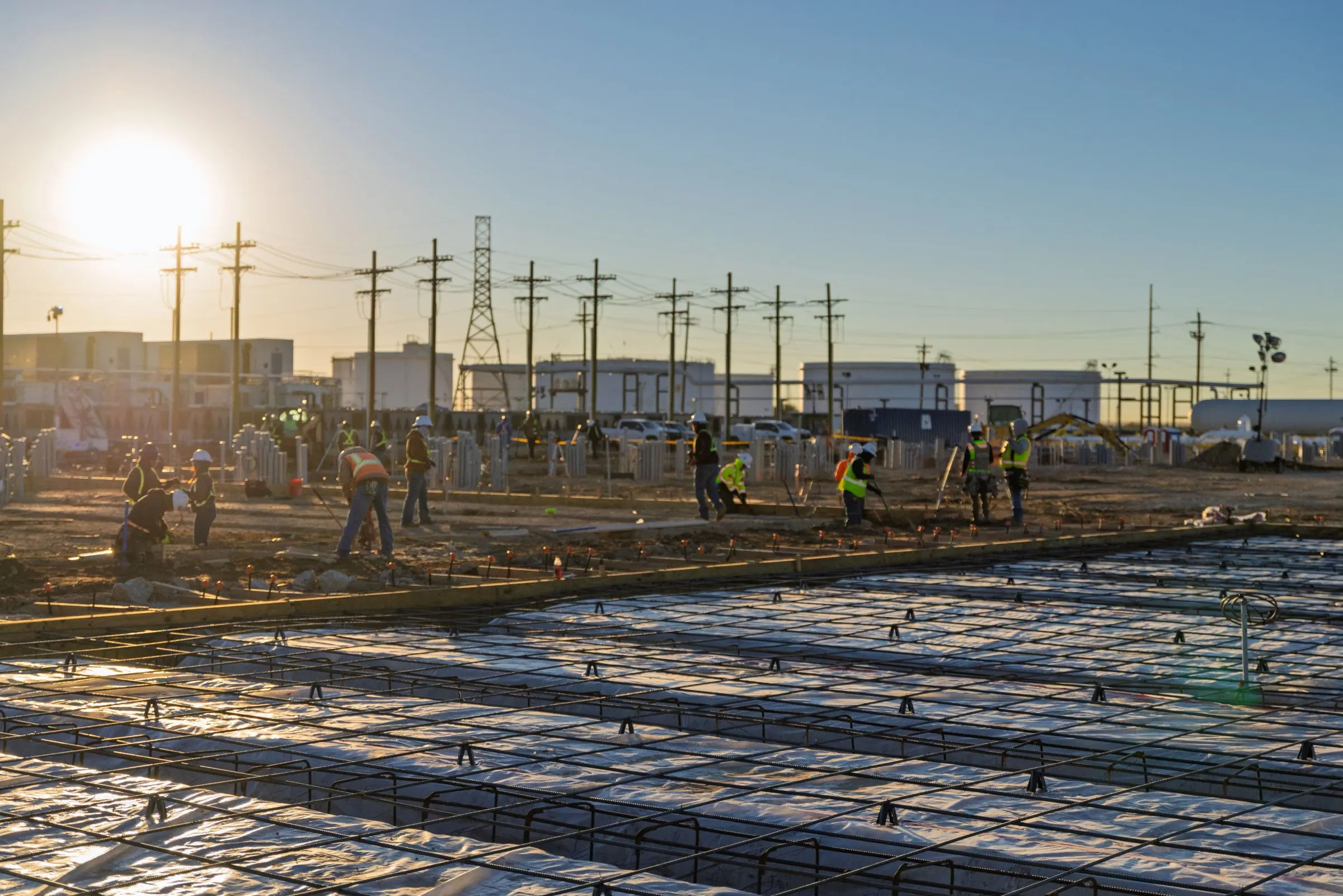
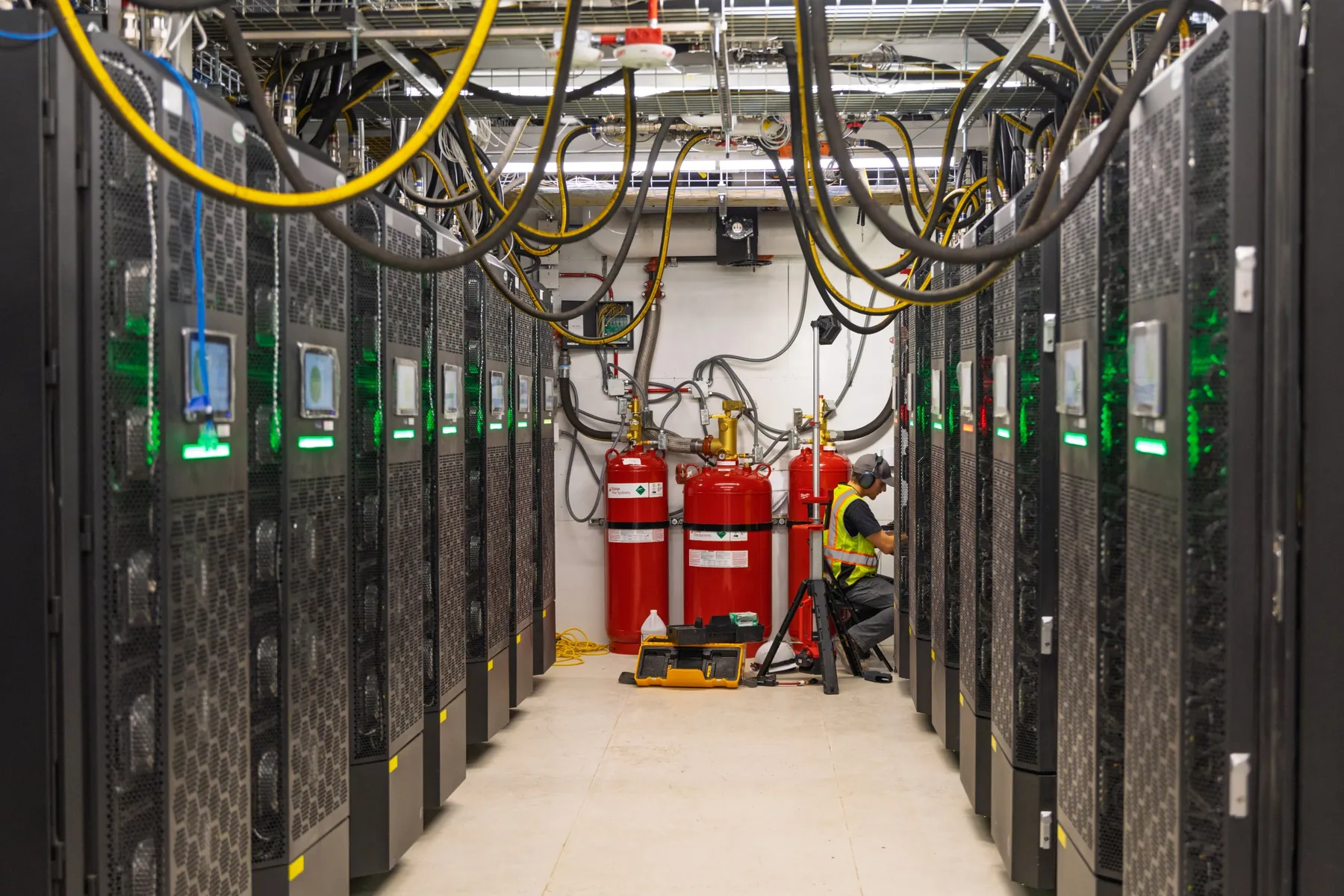
We build our data center buildings as complete welded-steel modules in our own factory, then deliver and assemble them on site. That means fewer construction months, fewer trucks on local roads, and quieter days for neighbors. Inspectors approve them like any other building.
By the numbers
Most of the welding, wiring, and testing done before a truck arrives
How we share it
Construction schedule and traffic plan, shared with county officials before work begins
Rooted for generations.
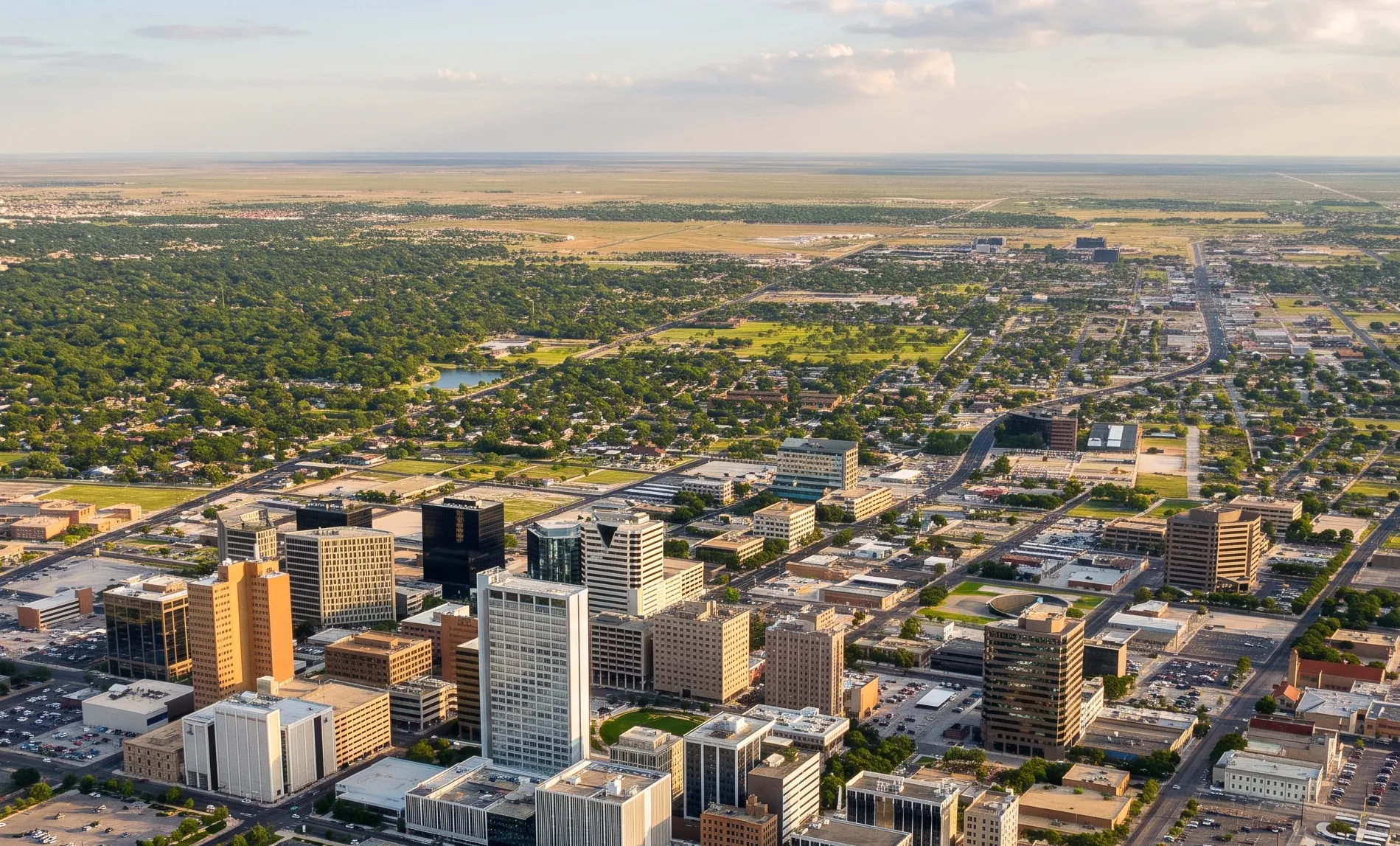
We secure our land for the long haul, and that horizon shapes how we act. We hire locally first, we contribute to the local economy, and we show up at county meetings because we plan to keep showing up for decades.
By the numbers
A 99-year land commitment in Odessa
How we share it
A yearly report on local hiring, wages, and training
Planned with local responders.
We build alongside the oil and gas operations that define this region, and we plan with them in mind. Fire setbacks are engineered into our power equipment layout, and we work with county emergency management and local fire departments before construction and throughout operations.
By the numbers
Emergency plan reviewed with county responders before the campus powers on
How we share it
Joint drills with local responders, reported every year
What we bring with us
Every big project has a footprint. Here’s ours.
You deserve to hear the tradeoffs from us first. Here is what a campus like ours brings to a community, and what we do about each.
What it bringsWhat we do about it
On-site power
Our on-site generation runs on natural gas, which produces emissions.
We operate under state air permits, use modern high-efficiency equipment, and publish our permit and monitoring results.
Sound
Generators, cooling equipment, and transformers make sound around the clock.
We model sound before we build, place equipment behind distance and barriers, monitor at our property line, and publish what we measure.
Construction traffic
Building a campus brings trucks and crews.
Factory-built modules shorten our time on site. We stagger deliveries and share our route plan with the county before work begins.
Housing demand
Permian housing is already tight, and crews need places to stay.
We hire locally first and plan workforce lodging so our crews add as little pressure as possible to local rentals.
Light at night
A secure campus needs lighting.
Shielded, downward-facing fixtures keep our light on our site and the West Texas night sky dark.
What we measure
Every year, a report card. Written for neighbors.
Each year we publish a plain-language community report and post it here. It covers the four things neighbors ask us about most.
Water
Metered local water use, with cooling fluid delivered from outside the region
First report: Fall 2027
Power
Our demand on the grid and how we respond when Texas is running tight
First report: Fall 2027
People
Local hiring, wages, and training pathways
First report: Fall 2027
Safety
Coordination with emergency services, drills, and any incidents
First report: Fall 2027
Questions we hear
Ask us anything. Start with these.
The questions neighbors ask us most about power, water, sound, jobs and safety, answered plainly.
PWR·01Will this data center raise my electric bill?
Our plan is built to keep our costs off your bill. We pay for our own power and for the equipment that delivers it, including substation work, on-site generation, and batteries.
PWR·02What happens when the Texas grid is stretched thin, like during a heat wave or a freeze?
Our on-site generation and batteries let the campus step back from the grid when Texas needs every megawatt for homes and hospitals. That is a big part of why we built our power in layers.
Water
WTR·01How much water will you use?
Only what our team uses in restrooms and sinks, the same as any local business our size. Our cooling runs on a glycol and water mixture trucked in from outside Odessa, so cooling leaves the local supply untouched.
WTR·02Where does the water to fill the cooling system come from?
We truck the mixture in from outside Odessa. The loop is sealed like a car radiator, so we fill it once and the same fluid recirculates from then on.
WTR·03Will you compete with residents and ranchers for water?
Our cooling water comes from outside the region, so the local supply stays with the families, ranches, and businesses that rely on it.
Air
AIR·01Does the campus burn natural gas?
Yes, and we say so plainly. Our on-site generation runs on natural gas. We operate under state air permits, use modern high-efficiency equipment, and publish our permit and monitoring results.
Sound
SND·01Will we hear it?
Our equipment makes sound, so we plan for it from day one. We model sound before we build, place equipment behind distance and barriers, and monitor at our property line, day and night.
Construction
BLD·01How long will construction take?
We build our buildings in our own factory and assemble them on site, so our on-site construction window is far shorter than a traditional build. We share the schedule with the county before work begins.
BLD·02Where will construction workers live?
We hire locally first. For crews from outside the area, we plan workforce lodging so they add as little pressure as possible to local rentals.
Jobs
JOB·01Will the jobs go to people who live here?
We hire locally first and work with local contractors and suppliers. The campus creates construction jobs during the build and permanent careers once it is running.
JOB·02Do I need a computer science degree to work there?
Many of our roles call for trade skills rather than a degree. Electricians, technicians, mechanics, and security staff keep a data center running, and we are building training pathways with local colleges.
Safety
SAF·01What happens if there is a fire or emergency?
Fire setbacks are engineered into our power equipment layout. We plan with county emergency management and local fire departments before we build, and we run joint drills once we operate.
SAF·02What happens to the campus as technology changes?
Our buildings are designed to be upgraded as computing hardware changes, so the campus keeps working as the industry moves forward. We hold our land for the long term, and we plan to be here for all of it.
Your local contact
A neighbor you can call.
Our community lead for the Permian Basin lives in Odessa and attends county meetings. Call, write, or stop by our community office hours.